Do NHL Teams Pull the Goalie Too Much? The Real Success Rate
The desperate, high-stakes gamble every hockey team makes — and what 2025-26 data says about whether it's worth it.
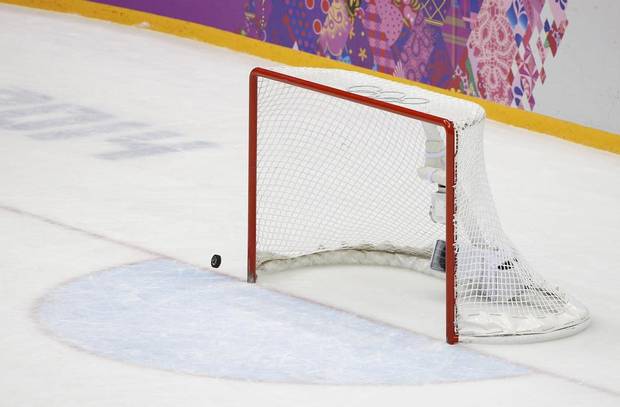
It is one of the most exciting moments in hockey. A team is losing late in the game. There is very little time left. So the coach makes a bold move: pull the goalie. The goalie skates to the bench, and an extra player jumps onto the ice. For about a minute, the losing team attacks hard — with their own net empty behind them.
It looks risky, and many fans think it almost never works. But is that true? We looked at every real "desperation pull"; in the 2025-26 NHL regular season — 575 of them — to see what really happens.
The answer is more hopeful than the goalie pull's reputation. Teams score more often than you would expect — close to 1 in 3 pulls when they are down a single goal — and about 15% of all pulls end with the tying goal. It is not a sure thing, but it is a real chance, not a wild last hope.
And that 15% is only the league average. Some teams are much better at it. The top teams tie the game about 1 in 3 times — twice the average — while a few teams almost never make it work. So the real question is not just does it work, but who makes it work. We will get to that.
What does "pulling the goalie" mean?
Pulling the goalie means the losing team takes their goalie off the ice and puts an extra skater on instead. Normally each team has five skaters plus a goalie. With the goalie gone, the losing team has one more attacker and an empty net.
Most of the time this makes it six skaters against five, which people call a "6-on-5." But it is not always 6-on-5. It depends on penalties. If the losing team is also on a power play, it can be 6-on-4. If they are down a player, it can be different too. The main idea is always the same: give up your net to get an extra attacker.
Why do it? Because when you are losing late, playing it safe gets you nothing. Losing by one goal or by three goals is the same in the standings — zero points. So the coach takes a risk. You get a better chance to score, but the other team can now shoot into your empty net.
How often does it work?
Here is what happened across all 575 pulls in 2025-26:
| Result | Pulls | Share |
|---|---|---|
| Did not score the goal they needed | 408 | 70% |
| Scored, but did not tie | 82 | 14% |
| Tied the game (it worked) | 85 | 15% |
Note: "did not score" is only about the team that pulled the goalie. In many of these games the other team scored into the empty net — that risk is covered further below.
And getting to overtime is where the reward is. Of those 85 tying goals, 47 teams went on to win (5 in regulation, 42 in overtime or the shootout). 38 still lost. So once you tie the game, it is close to a coin flip. The hard part is getting there.
Why coaches keep doing it
If it fails most of the time, why is pulling the goalie now normal — and why do coaches do it earlier than before? Because the risk is already there.
When you are losing late, a loss is a loss. Giving up an empty-net goal to lose by two does not hurt you more in the standings. But scoring to tie the game gives you at least one point, and a chance at two. So even a 15% success rate is a smart bet. You risk points you were going to lose anyway, to win points you could not get otherwise. That is why teams now pull the goalie sooner.
Down 1 vs. down 2: the score matters a lot
The most important thing is how many goals you need. But here is the surprising part: teams score at almost the same rate no matter how many goals they are down. Goals come back even from two or three down. Counting the pulls where a team scored, more goals came back from two-or-more goals down than from just one goal down.
| Deficit | Pulls | Scored | Won |
|---|---|---|---|
| Down 1 | 261 | 29% | 16% |
| Down 2 | 233 | 28% | 2% |
| Down 3 | 78 | 26% | 0% |
So getting a goal is not the hard part. Teams do that a lot, even when down two or three. The hard part is getting enough goals in time. Down two, you need two goals. Down three, you need three. And the clock is short. That is why teams keep scoring but rarely win once they are down more than one. Pulling the goalie brings goals back at any score. It just does not often bring back the whole game.
The risk: empty-net goals
The other side of the bet is painful. In 2025-26, pulls led to about 450 empty-net goals against. That is about five empty-net goals for every one pull that tied the game. This is the goal that turns a close one-goal loss into a two-goal loss.
The worst case: 46 times a team scored to get close, and then gave up the empty-net goal on the same pull. All 46 ended in a loss.
Which NHL teams pull the goalie best?
Not every team is good at this. Here are the best teams in 2025-26 (at least 10 desperation pulls), sorted by how often they got the tying goal:
| Team | Pulls | Scored | Tied it | Won |
|---|---|---|---|---|
| Vegas (VGK) | 17 | 47% | 35% | 17% |
| Anaheim (ANA) | 27 | 44% | 29% | 22% |
| Edmonton (EDM) | 14 | 35% | 28% | 21% |
| Montreal (MTL) | 18 | 38% | 27% | 22% |
| Pittsburgh (PIT) | 19 | 36% | 26% | 5% |
| Colorado (COL) | 14 | 42% | 21% | 14% |
| Carolina (CAR) | 17 | 35% | 17% | 11% |
| Dallas (DAL) | 16 | 50% | 6% | 6% |
Anaheim are the comeback team. No one pulled the goalie more — 27 times — and it worked. They scored on 44% of pulls and tied the game 29% of the time. They have a young, skilled group. It is no surprise that Leo Carlsson — who got a big $18M offer sheet this offseason — is one of the top players in these moments, along with Mason McTavish, Troy Terry, and Chris Kreider.
Vegas had the best tie rate in the league at 35%, with Tomas Hertl leading the way. For them, the empty net is a real weapon, not just a last hope.
Edmonton shows the star effect. Put the best player in the world on the ice with an extra man and good things happen — they scored on 35% of pulls and tied 28%.
Interesting note: Carolina, who won the Stanley Cup, and Colorado, who won the Presidents' Trophy, are only in the middle. Good teams do not trail late as often, so they get less practice at it. Being good at goalie pulls is mostly a skill that losing teams build up.
And then there is Dallas. They scored on 50% of their pulls — as much as anyone — but tied the game only 6% of the time. Getting a goal is not the same as getting the right goal at the right time.
Some teams are just not good at it
Here is the other side. For some teams, the empty net gives them almost nothing. There is always a little hope — that is why teams keep trying — but the numbers for these teams are hard to watch:
| Team | Pulls | Scored | Tied it | Won |
|---|---|---|---|---|
| Toronto (TOR) | 20 | 15% | 0% | 0% |
| Buffalo (BUF) | 15 | 13% | 0% | 0% |
| Vancouver (VAN) | 27 | 22% | 3% | 3% |
| Calgary (CGY) | 20 | 15% | 5% | 0% |
| Chicago (CHI) | 15 | 6% | 6% | 0% |
Toronto pulled the goalie 20 times and tied the game zero times. Buffalo did it 15 times and also got nothing. Vancouver tried 27 times — more than almost anyone — and tied only once. For teams like these, the goalie pull can feel more like a habit than a real plan. The hope is never zero, but the payoff is small. Sometimes the smarter move may be to keep the goalie in a little longer and pick better moments to go all in.
The players who do well with the net empty
The top scorers during desperation pulls in 2025-26 (points = goals + assists):
| Player | Team | Points | G | A |
|---|---|---|---|---|
| Mathew Barzal | NYI | 8 | 1 | 7 |
| Matthew Schaefer | NYI | 7 | 2 | 5 |
| Tomas Hertl | VGK | 6 | 4 | 2 |
| Jesper Bratt | NJD | 6 | 1 | 5 |
| Jack Hughes | NJD | 6 | 0 | 6 |
| Anders Lee | NYI | 5 | 5 | 0 |
| Leo Carlsson | ANA | 5 | 2 | 3 |
The Islanders lead this list. Barzal, young star Matthew Schaefer, and Anders Lee give New York three of the top players. New Jersey's Hughes and Bratt also do a lot, and Anaheim's Carlsson keeps showing up.
When do coaches pull the goalie?
Timing is the other big part. For a long time, coaches waited until about one minute left. Now, thanks to stats, they do it earlier — often with two to three minutes left when down one goal, and even earlier when down two. More time with the extra attacker means a better chance to score, and the empty-net goal does not really cost you more when you are already losing.
One more thing: not every empty net is a desperation pull. Teams also pull the goalie for a few seconds during a delayed penalty, when the other team is about to be called and cannot touch the puck. That is a free extra attacker with no risk. We did not count those here.
Common questions
Does pulling the goalie really work? Sometimes. In 2025-26, about 15% of real desperation pulls got the tying goal, and about 1 in 12 led to a win. It fails most of the time, but the reward — a point in the standings — makes it worth trying.
How much time is left when teams pull the goalie? Usually the last one to three minutes. Coaches pull earlier when down one goal.
Is it worth pulling the goalie when down by two? The numbers are not good. Teams down two scored on 28% of pulls but won only 2% of the time. You need too many goals in too little time. It is still worth trying, because the other choice is a sure loss.
What is a 6-on-5 in hockey? It is what usually happens when you pull the goalie: six skaters against five skaters and a goalie. If the losing team is also on a power play, it can be 6-on-4 instead.
Why do coaches pull the goalie if it usually fails? Because a loss is a loss. Giving up an empty-net goal to lose by two costs nothing extra in the standings, but tying the game earns a point.
Who is best at scoring with the goalie pulled? In 2025-26, the New York Islanders (Mathew Barzal, Matthew Schaefer, Anders Lee) led the way, with New Jersey's Jack Hughes and Jesper Bratt and Vegas's Tomas Hertl close behind.
All numbers are from the 2025-26 NHL regular season and count real desperation pulls only (we left out short delayed-penalty pulls).
If you found this interesting, share it with a hockey friend!
And if you have a question the tables did not answer, ask Oracle, our hockey chatbot. It can pull up stats and help you settle the debate.